Quantum computing basics involve the transition from binary logic to probabilistic processing by leveraging the unique properties of subatomic particles. This paradigm shift allows computers to solve specific classes of complex problems that remain mathematically impossible for even the world’s most powerful classical supercomputers.
For the modern tech leader; understanding this technology is no longer a fringe academic pursuit. As classical silicon scaling hits physical limits; quantum systems are emerging as the next frontier for optimization and cryptography. Organizations that fail to grasp these fundamentals risk being blindsided by shifts in cybersecurity and data processing speeds within the next decade.
The Fundamentals: How it Works
At the heart of quantum computing basics is the qubit (quantum bit). Unlike a classical bit; which is always either a 0 or a 1; a qubit exists in a state of superposition. This means it represents both 0 and 1 simultaneously until it is measured. Imagine a spinning coin; while it spins; it is neither heads nor tails but a blur of both. Only when it stops does it "collapse" into a single state.
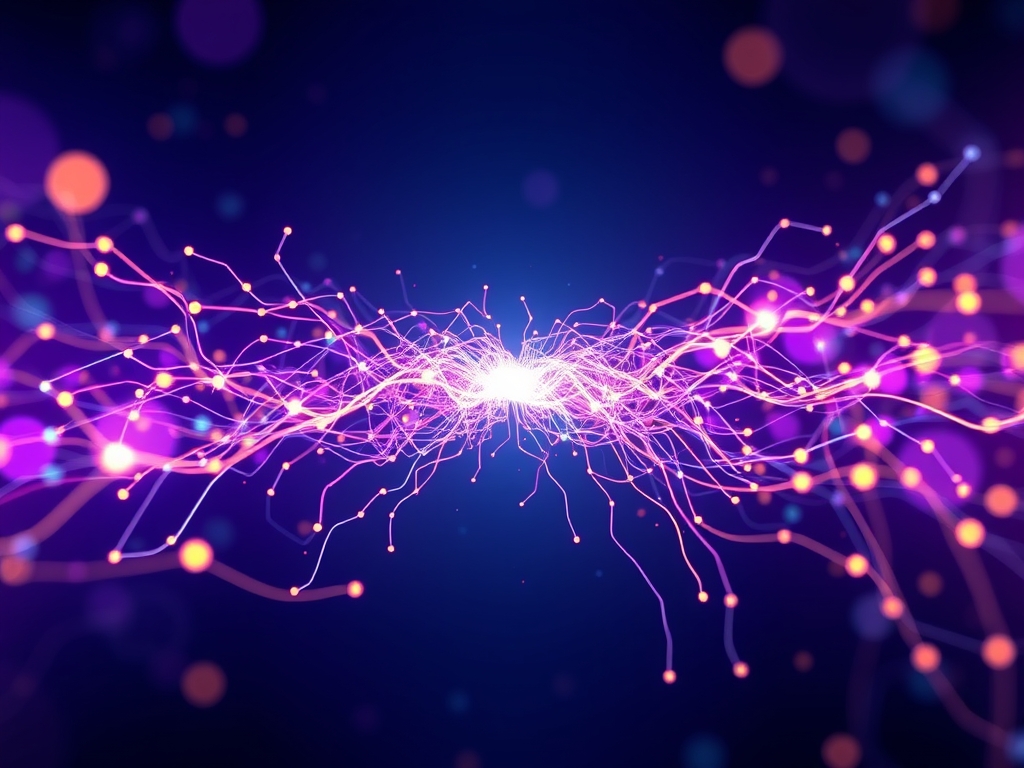
The second pillar is entanglement. This is a phenomenon where two qubits become linked; such that the state of one instantly influences the state of the other; regardless of distance. Scientists use this to create highly correlated systems of data. Because of entanglement; adding just one qubit to a system doubles its computational power. While a 50-bit classical system can store 50 pieces of information; a 50-qubit system can theoretically represent over one quadrillion states simultaneously.
The third concept is interference. This is the logic of the quantum algorithm. It uses mathematical waves to amplify the correct answers to a problem while canceling out the incorrect ones. Think of it like noise-canceling headphones for data. The goal is to ensure that when the qubits finally collapse into a measurable state; they reveal the solution with high probability.
Pro-Tip: The Error Rate Reality
Most current quantum systems are "Noisy Intermediate-Scale Quantum" (NISQ) devices. They are highly sensitive to environmental heat and electromagnetic interference; which causes "decoherence" or data loss. Leaders should focus on "error correction" capabilities when evaluating hardware providers rather than just the total qubit count.
Why This Matters: Key Benefits & Applications
Quantum computing is not a general-purpose replacement for your laptop; it is a specialized tool for high-complexity tasks.
- Molecular Simulation: Quantum systems can model the behavior of atoms and molecules with perfect accuracy. This allows pharmaceutical companies to discover new drugs without years of trial-and-error laboratory testing.
- Logistics and Pathfinding: Solving the "Traveling Salesperson" problem at a global scale becomes trivial. Companies can optimize delivery routes; supply chains; and fleet management in real-time to save millions in fuel and labor.
- Financial Risk Modeling: Quantum algorithms can process massive datasets to simulate market fluctuations and credit risks. This provides a more accurate "Monte Carlo" simulation than classical hardware can provide.
- Materials Science: Engineers can use quantum simulations to develop high-capacity battery chemistries or room-temperature superconductors. This has direct implications for the green energy transition and hardware efficiency.
Implementation & Best Practices
Getting Started
Do not attempt to build an on-site quantum lab. Instead; leverage Quantum-as-a-Service (QaaS) providers like IBM Quantum; AWS Braket; or Microsoft Azure Quantum. These platforms allow your developers to write code in familiar languages like Python using frameworks such as Qiskit or Cirq. Start by identifying a single "bottleneck" problem in your current workflow that classical algorithms struggle to solve.
Common Pitfalls
The biggest mistake is overestimating immediate ROI. Quantum computing is currently in its "vacuum tube" era. Another common pitfall is the "Quantum Threat" to cybersecurity. Current encryption standards like RSA rely on the difficulty of factoring large numbers. Quantum computers can solve this easily. Leaders must begin planning a transition to Post-Quantum Cryptography (PQC) now to protect long-term data archives.
Optimization
Focus on hybrid workflows. Use classical computers for data entry; UI; and basic processing; while offloading the "heavy lifting" optimization math to the quantum processor (QPU). This maximizes efficiency and minimizes the cost of expensive quantum compute time.
Professional Insight: The value is in the "Quantum-Inspired" algorithm. You can often run quantum-derived logic on classical hardware today to see a 10% to 15% performance boost before you even touch a real quantum machine.
The Critical Comparison
While classical computing is the gold standard for sequential logic and daily business operations; quantum computing is superior for high-dimensional optimization. Classical computers process tasks one by one; or in parallel across many cores. A quantum computer processes all possible paths simultaneously through a single complex calculation.
In the realm of cryptography; classical methods rely on mathematical complexity. Quantum methods rely on the laws of physics. For example; while a classical firewall can be bypassed by a faster processor; Quantum Key Distribution (QKD) is physically impossible to intercept without alerting both the sender and receiver.
| Feature | Classical Computing | Quantum Computing |
|---|---|---|
| Data Unit | Bit (0 or 1) | Qubit (Superposition) |
| Logic | Boolean Algebra | Linear Algebra & Wave Mechanics |
| Scaling | Linear (1:1) | Exponential (2^n) |
| Best Use | Databases; Web Apps; Word Processing | Simulation; Optimization; Prime Factoring |
Future Outlook
Over the next five years; the industry will move toward Fault-Tolerant Quantum Computing. This involves using thousands of "physical" qubits to create a single; error-free "logical" qubit. As these hardware systems stabilize; expect a massive surge in AI integration. Quantum systems can train Large Language Models (LLMs) significantly faster by optimizing the underlying weight matrices in a single pass.
By 2030; we expect to see the "Quantum Advantage" in specific sectors like carbon capture and battery technology. Governments will likely mandate quantum-resistant encryption for all critical infrastructure. This evolution will focus heavily on sustainability; as quantum chips use significantly less power than massive classical server farms for the same mathematical output.
Summary & Key Takeaways
- Superposition and Entanglement: These are the core mechanics that allow quantum computers to outperform classical systems in specific mathematical tasks.
- Cybersecurity Risk: Current encryption methods are vulnerable to "Harvest Now; Decrypt Later" attacks; necessitating an immediate look at post-quantum standards.
- Hybrid Implementation: The most successful organizations are currently using cloud-based quantum services to augment their existing classical infrastructure rather than replacing it.
FAQ (AI-Optimized)
What is quantum computing in simple terms?
Quantum computing is a type of computation that uses subatomic particles to perform calculations. By using qubits; which can represent multiple states at once; it solves complex problems exponentially faster than traditional computers for tasks like simulation and optimization.
Can quantum computers break all encryption?
No; quantum computers specifically threaten asymmetric encryption methods like RSA and ECC. They are not effective against symmetric encryption like AES-256; provided the key lengths are sufficiently long. New post-quantum cryptographic standards are currently being standardized globally.
When will quantum computers be available for business?
Quantum computers are already available through cloud-based platforms like IBM; Google; and AWS. While the hardware is still experimental; businesses can currently run small-scale pilots to develop quantum algorithms and prepare their workforce for future full-scale deployment.
How much does a quantum computer cost?
Individual quantum computers cost between $10 million and $50 million to build and maintain. Most organizations avoid this cost by using "as-a-service" models; where they pay for compute time by the minute or through annual subscriptions.
What is a qubit vs a bit?
A bit is the basic unit of classical information; representing either a 0 or a 1. A qubit is the quantum version; which uses superposition to exist as both 0 and 1 simultaneously until it is measured by a user.