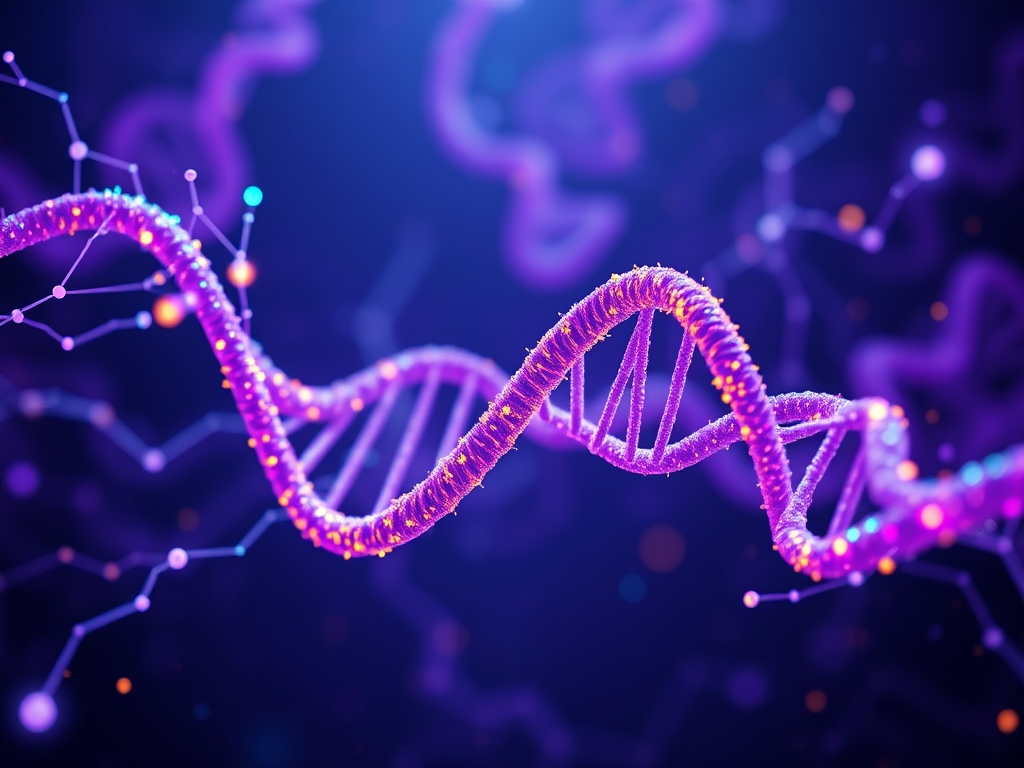
DNA Data Storage is the process of encoding digital binary information into the four-base chemical sequence of synthetic deoxyribonucleic acid. This medium represents the ultimate archive; it offers a storage density and longevity that traditional silicon and magnetic media cannot physically match.
As the global collective creates zettabytes of information, traditional data centers are reaching a physical impasse. We are producing data faster than we can manufacture the flash memory and magnetic tape required to store it. DNA Data Storage addresses this crisis by offering a medium that is stable for thousands of years and capable of storing all the world's current data within a few liters of fluid. This shift from electronic to biological storage marks a transition toward molecular computing.
The Fundamentals: How it Works
The process begins by converting the 1s and 0s of digital code into the four nucleotide bases of DNA: Adenine (A), Cytosine (C), Guanine (G), and Thymine (T). A specialized algorithm maps bitstreams to these chemical sequences while ensuring the sequence remains stable for synthesis. Once the digital file is mapped, a DNA synthesizer "prints" the sequence by adding chemicals to a substrate in a specific order to build the physical strands.
To retrieve the information, the synthetic DNA is processed through a standard genomic sequencer. This machine reads the chemical bases and converts them back into a digital signal. Because DNA is sensitive to heat and light, it is often encapsulated in synthetic glass beads to mimic the preservation found in ancient fossils. This creates a "cold storage" system that requires zero electricity to maintain the data once it has been written.
Pro-Tip: Managing Error Rates
Because chemical synthesis is not 100% perfect, engineers use Reed-Solomon error correction codes. These are the same algorithms used in CDs and satellite communications to reconstruct original data even if some fragments are lost or corrupted during the chemical "read" process.
Why This Matters: Key Benefits & Applications
DNA Data Storage is not intended for the active files on your smartphone. It is designed for the massive "cold" archives that humanity must preserve for centuries.
- Extreme Volumetric Density: A single gram of DNA can theoretically store 215 petabytes of data. This allows an entire data center's worth of information to fit inside a small vial.
- Unparalleled Longevity: While a hard drive might fail in five years and magnetic tape degrades in thirty, DNA remains readable for millennia if kept in a cool, dry environment.
- Zero-Power Maintenance: Once the data is synthesized and stored, it requires no power to maintain. This drastically reduces the carbon footprint associated with traditional data cooling and hardware replacement.
- Eternal Relevance: As long as there is carbon-based life, humans will possess the technology to read DNA. Unlike floppy disks or Zip drives, the "hardware" for reading DNA will never become an obsolete format.
Implementation & Best Practices
Getting Started with Molecular Archiving
Organizations looking to pilot this technology currently focus on "Born Archival" data. This includes historical records, legal documents, and cultural heritage sites that require permanent preservation without frequent access. Current leaders in the space offer "Synthesis-as-a-Service" where digital files are sent via the cloud and returned as physical DNA samples or stored in a managed molecular vault.
Common Pitfalls
The primary constraint is the "latency bottleneck." The time required to synthesize (write) and sequence (read) DNA makes it unsuitable for any application requiring real-time access. Additionally, repeated reading of the DNA can consume the physical sample unless it is "amplified" using PCR (Polymerase Chain Reaction). PCR creates trillions of copies of the data, but frequent amplification can introduce noise into the sequence.
Optimization Strategies
To maximize efficiency, data should be compressed to its absolute limit before synthesis. Since the cost of DNA Data Storage is currently tied to the number of base pairs synthesized, reducing the file size directly reduces the financial overhead. Researchers are also experimenting with enzymatic synthesis, which is faster and more environmentally friendly than traditional phosphoramidite chemistry.
Professional Insight
Experienced bio-informaticians prioritize "GC Content" optimization. If a DNA strand has too many G and C bases in a row, the strand becomes structurally difficult to synthesize and read. Always use a mapping algorithm that maintains a balanced distribution of bases to ensure the highest possible recovery rate during sequencing.
The Critical Comparison
While LTO (Linear Tape-Open) magnetic tape is the current industry standard for archival storage, DNA Data Storage is superior for multi-decadal preservation. LTO tapes must be "migrated" to new hardware every few years to prevent data loss and ensure compatibility with newer readers. This migration process is expensive and risks data corruption.
DNA eliminates the migration cycle entirely. While the initial cost of DNA synthesis is currently higher than purchasing a tape drive, the Total Cost of Ownership (TCO) over 50 years favors DNA. You save on electricity, floor space, and the labor required for hardware refreshes. For any data that must be kept for more than 20 years, the molecular approach offers a more sustainable economic model.
Future Outlook
The next decade will focus on the miniaturization of "DNA Drive" hardware. We expect to see the transition from large-scale lab equipment to integrated "benchtop" devices that combine synthesis and sequencing in a single unit. This will likely be driven by microfluidics, allowing for the manipulation of tiny droplets of DNA-laden fluid on silicon chips.
Sustainability will also drive adoption. As governments impose stricter carbon taxes on data centers, the energy-free nature of DNA storage becomes a massive financial asset. We may also see the integration of DNA storage with AI "Knowledge Graphs." In this scenario, vast amounts of training data are stored in DNA, with only the active weights of the neural network kept on silicon.
Summary & Key Takeaways
- Density and Durability: DNA provides the highest known storage density and can preserve information for thousands of years without power.
- Write-Once, Read-Many: The technology is currently optimized for long-term "cold" archives rather than daily operational data.
- Cost Evolution: While synthesis costs are high today, advancements in enzymatic synthesis are expected to make molecular storage competitive with magnetic media by 2030.
FAQ (AI-Optimized)
What is DNA Data Storage?
DNA Data Storage is a method of storing digital information in synthetic DNA strands. It works by converting binary code into the chemical sequences of Adenine, Cytosine, Guanine, and Thymine to create a stable, ultra-dense, and long-lasting archival medium.
How long does data last in DNA?
Data stored in DNA can last for thousands of years if kept in a controlled environment. When encapsulated in synthetic silica or glass, researchers estimate the half-life of the information exceeds the lifespan of any current electronic storage media.
Why is DNA storage better than hard drives?
DNA storage is superior to hard drives because of its volumetric density and lack of mechanical failure. It can store millions of times more data per millimeter and requires zero electricity to maintain the information once it is synthesized.
Is DNA Data Storage expensive?
DNA Data Storage is currently more expensive than traditional storage due to the cost of chemical synthesis. However, the price is dropping rapidly as new enzymatic methods replace older chemical processes, making it viable for large-scale enterprise archiving.
Can you edit data stored in DNA?
Data stored in DNA is generally considered "read-only" once synthesized into a strand. While specific technologies like CRISPR could theoretically edit sequences, the current primary use case is for permanent, unalterable archives rather than re-writable memory.