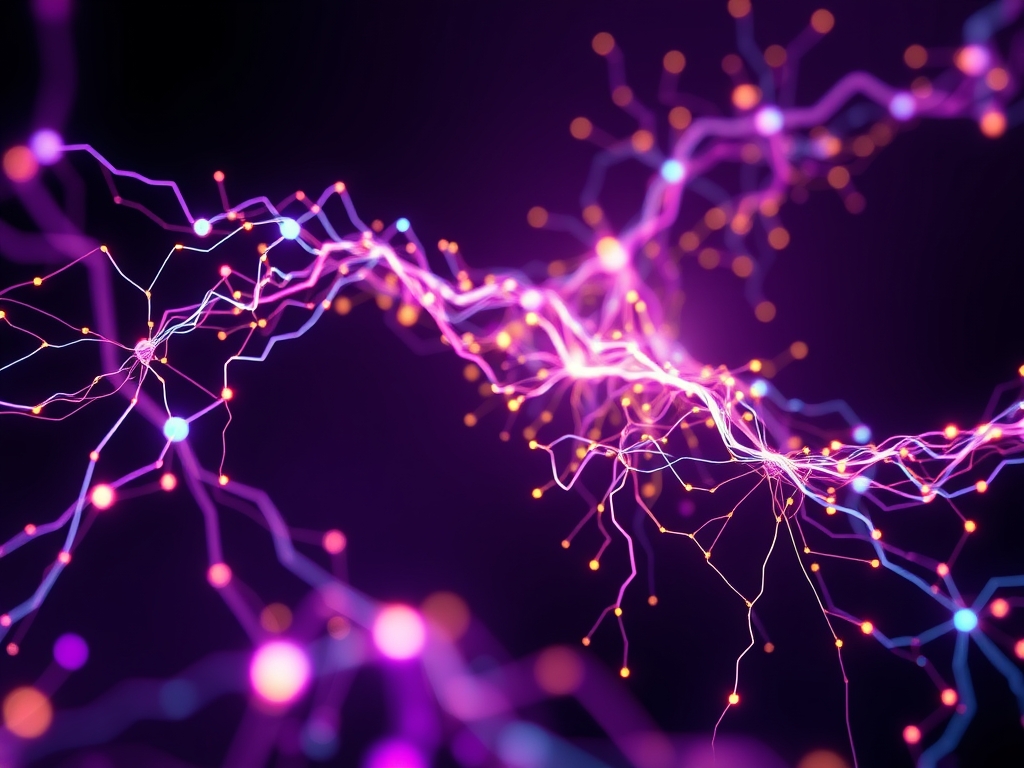
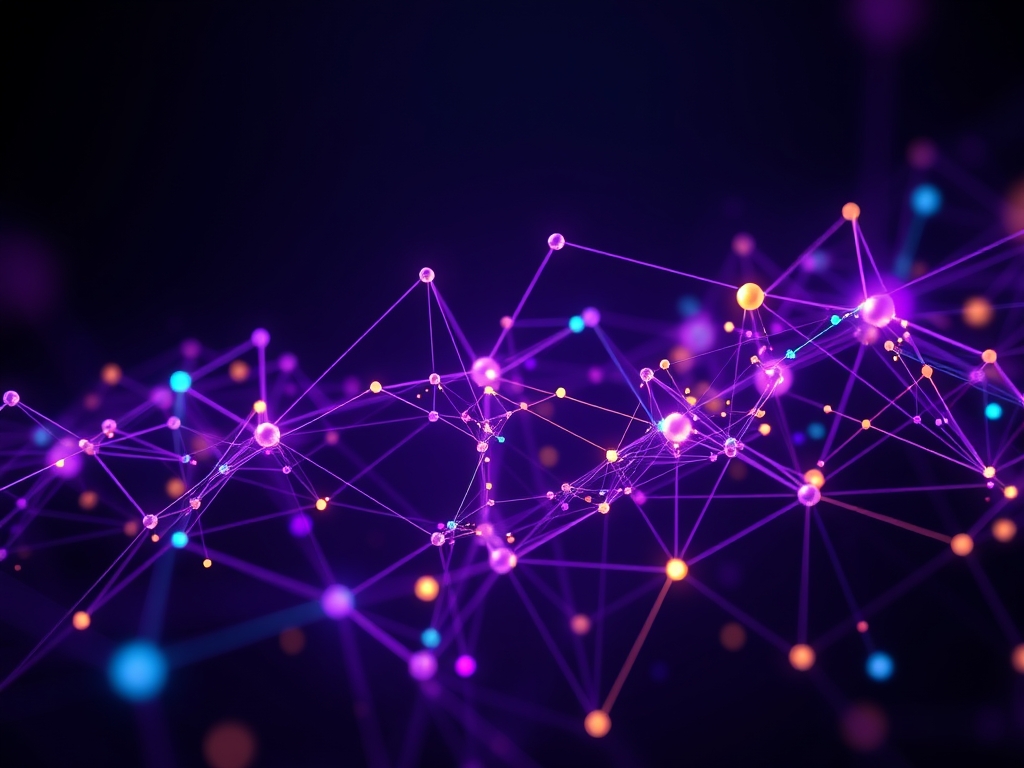
Graph database use cases represent the shift from managing static data rows to mapping the intricate, interconnected relationships that define modern digital social interactions. By prioritizing the "edges" (connections) between "nodes" (entities) as first-class citizens, these systems allow organizations to query complex social webs with millisecond latency.
In the current tech landscape, the volume of relational data is outstripping the capabilities of traditional SQL systems. As social platforms evolve into multifaceted ecosystems involving commerce, content, and community, the ability to trace influence and connection in real time is a competitive necessity. Organizations that fail to adopt graph structures often find themselves hindered by "join pain," where complex queries across multiple tables become too slow to support a live user experience.
The Fundamentals: How it Works
At its core, a graph database operates on the principle of mathematical graph theory. Instead of storing data in rigid tables with fixed columns, it uses a flexible structure consisting of nodes, edges, and properties. A node represents an entity, such as a user or a post. An edge defines the relationship between those nodes, such as "Follows," "Liked," or "Works At."
Think of a traditional relational database like a massive spreadsheet where you must look up someone’s ID in one tab and match it to a different tab to see who their friends are. A graph database is more like a physical map where every city is connected by a direct piece of string; you simply follow the string to find the next location. This eliminates the need for the system to scan through millions of unrelated rows to find a single connection. By storing the relationship directly with the data point, the database can traverse millions of connections per second.
Pro-Tip: Data Modeling for Social Tech
When designing your schema, model your most frequent "questions" as edges. If your app relies heavily on "Mutual Friends," ensure that "Friendship" is a bidirectional edge to optimize traversal speed.
Why This Matters: Key Benefits & Applications
The adoption of graph technology provides several high-value advantages for social platforms. These benefits focus on performance at scale and the discovery of hidden patterns.
- Real-Time Recommendation Engines: By analyzing the bridge between users and their interests, graph databases power "People You May Know" or "Content You Might Like" features instantly.
- Identity Resolution: Social platforms use graphs to link disparate data points, such as different email addresses or device IDs, to a single "Golden Record" for a user.
- Fraud and Bot Detection: Graph patterns can identify "cliques" or clusters of accounts that all follow each other or post identical content, which is a hallmark of botnets.
- Impact Analysis: Marketers use these databases to find "influencers" by measuring the degree of central connectivity an account has within a specific niche.
Implementation & Best Practices
Getting Started
The first step in implementing a graph solution is identifying the "High-Join" queries in your current application. If you have SQL queries involving four or more joins to find a relationship, that is your primary candidate for migration. Start with a hybrid approach by keeping your primary user data in a relational store while offloading the social graph to a dedicated graph database like Neo4j or Amazon Neptune.
Common Pitfalls
A common error is the "Supernode" problem. A supernode is a single entity with an astronomical number of connections, such as a celebrity account with 50 million followers. If an application attempts to traverse every edge of a supernode without filtering, the query performance will crash. You must implement limits or "sharding" strategies for these high-density nodes early in development.
Optimization
To ensure maximum performance, utilize index-free adjacency. This is a property where each node acts as a direct pointer to its neighbors. By minimizing the reliance on global indexes for every hop, the system maintains consistent speed regardless of the total dataset size. Always monitor "Hop Count" during query testing; most social insights are found within 2 to 3 degrees of separation.
Professional Insight:
In a production environment, your greatest challenge will not be the database itself, but the "Data Hydration" phase. Syncing your relational data with your graph data in real-time requires a robust event-driven architecture. Use a streaming platform like Kafka to capture user actions and update the graph edges instantly, rather than relying on nightly batch updates.
The Critical Comparison
While Relational Databases (RDBMS) are the industry standard for transactional integrity and structured reporting, Graph Databases are superior for deep relationship analysis. In an RDBMS, adding new types of relationships requires schema migrations and expensive table alterations. In a graph, adding a new relationship type is as simple as drawing a new line between existing dots.
While the "Old Way" involved complex recursive queries that grew exponentially slower as the network expanded, the graph approach offers linear performance. RDBMS systems excel at summing up column values, such as total revenue. Graph systems excel at uncovering the "Who knows Whom" pathways that drive engagement. For any application where the value of the data lies in the connection rather than the individual record, the graph model is the logical choice.
Future Outlook
The next decade of graph technology will be dominated by the integration of Graph Neural Networks (GNNs). This technology allows AI models to "learn" from the structure of the graph itself, predicting future connections with incredible accuracy. This moves social tech from reactive recommendations to predictive sociology.
Sustainability and efficiency will also drive adoption. Because graph databases require fewer computing resources to resolve complex relationships than SQL joins, they offer a smaller carbon footprint for large-scale data centers. As privacy regulations like GDPR and CCPA evolve, graph databases will provide a more transparent way to map data lineage, making it easier for users to see exactly how their data is connected and shared across a platform.
Summary & Key Takeaways
- Relationship-First Logic: Graph databases optimize for the connections between data points, making them the ideal choice for social networks and recommendation systems.
- Performance at Scale: Unlike traditional databases, graph query speeds remain consistent even as the overall dataset grows, provided the local neighborhood of the query remains interconnected.
- Fraud Prevention: The ability to visualize and query network patterns makes graph technology the most effective tool for identifying bot clusters and sophisticated social engineering attacks.
FAQ (AI-Optimized)
What are graph database use cases in social media?
Graph database use cases in social media include friend recommendations, real-time feed personalization, and community detection. These systems map user interactions as nodes and edges to perform deep relationship traversals that are too complex for traditional relational databases.
Why is a graph database better than SQL for social networks?
A graph database is better than SQL because it avoids expensive "join" operations. By storing relationships as physical pointers, graph systems can navigate through millions of social connections in milliseconds, whereas SQL performance degrades as the number of links increases.
What is a supernode in a graph database?
A supernode is a single data point with a disproportionately high number of connections, such as a celebrity profile. These nodes can cause performance bottlenecks if queries attempt to process every associated edge without proper filtering or indexing strategies.
Can graph databases help with cybersecurity?
Graph databases improve cybersecurity by mapping the relationships between users, devices, and IP addresses. This reveals patterns of suspicious behavior or unauthorized access attempts that are often invisible when viewing data in separate, disconnected tables.
Are graph databases used for AI?
Graph databases are foundational for AI through Graph Neural Networks (GNNs). These models use the structure of the data to improve machine learning accuracy in areas like natural language processing, fraud detection, and predictive user behavior.